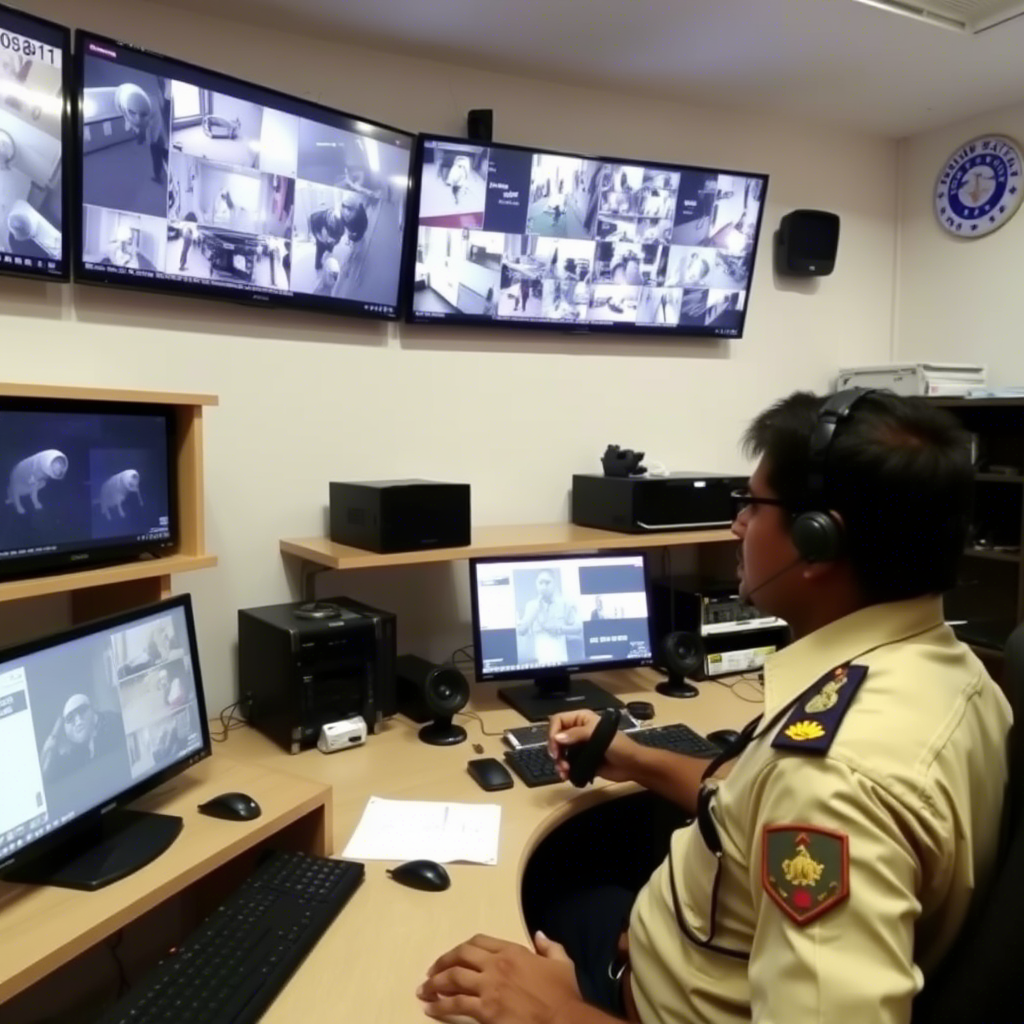



The integration of Artificial Intelligence (AI) into the CCTV industry has transformed passive monitoring into proactive, intelligent security systems. From facial recognition and behavior analysis to predictive policing, AI-driven surveillance is reshaping global security paradigms. At the forefront of this revolution is China, which has emerged as the undisputed leader in developing and deploying AI surveillance technologies.
The Rise of AI in CCTV Systems
Modern AI-powered CCTV systems go far beyond simple video recording. They incorporate:
- Real-time Analytics: AI algorithms can instantly analyze video feeds to detect suspicious activities, recognize faces, and identify objects without human intervention34.
- Predictive Capabilities: Advanced systems can predict potential security threats by analyzing patterns and behaviors, enabling preemptive action59.
- Automated Alerts: Smart cameras can immediately notify security personnel of anomalies, reducing response times and minimizing human error.
- Data Processing: AI transforms vast amounts of video data into actionable insights, making surveillance systems more efficient and effective1112.
China’s Dominance in AI Surveillance
China’s leadership in AI surveillance technology is evident across multiple dimensions:
1. Market Dominance
Chinese companies control a significant share of the global AI surveillance market. Hikvision, Dahua, Huawei, and ZTE are among the top players, with Hikvision alone holding over 21% of global video surveillance market share23. The Asia-Pacific region accounts for approximately 64% of the global AI surveillance camera market, largely driven by Chinese deployments and exports.
2. Technological Innovation
Chinese firms have pioneered numerous AI surveillance applications:
- Facial Recognition: Advanced systems capable of identifying individuals in crowded spaces with high accuracy59
- Gait Analysis: Technology that can identify people by their walking patterns, even when faces are obscured
- Predictive Policing: AI systems that analyze behavior patterns to predict potential criminal activity before it occurs5
- Smart City Integration: Comprehensive surveillance networks integrated with traffic management, public safety, and urban planning systems
3. Global Export of Surveillance Technology
Chinese AI surveillance technology has reached across the globe:
- Huawei alone has provided AI surveillance technology to at least 50 countries8
- Chinese companies have exported surveillance systems to 63 countries and regions, with 36 of these being part of China’s Belt and Road Initiative8
- Countries like Kenya, Laos, Mongolia, Uganda, and Uzbekistan have adopted Chinese surveillance technologies, often supported by Chinese financing78
4. Government Support and Investment
The Chinese government has played a crucial role in fostering AI surveillance innovation:
- Substantial funding for AI research and development6
- Supportive policies that encourage adoption of surveillance technologies
- Integration of AI surveillance into national security and social management systems10
Why China Leads: Key Factors
Scale of Deployment
China has the world’s largest surveillance network, with hundreds of millions of cameras deployed across the country. This massive scale provides:
- Vast amounts of data for training AI algorithms
- Real-world testing environments for refining technologies
- Economies of scale that reduce costs
Integrated Ecosystem
Chinese companies offer complete solutions—from cameras and sensors to analytics software and cloud platforms—creating seamless, interoperable systems that are attractive to international buyers.
Cost Competitiveness
Chinese surveillance products often offer advanced features at significantly lower prices than Western alternatives, making them accessible to developing countries and budget-conscious organizations.
Rapid Innovation Cycle
The combination of government support, market demand, and technological expertise has created an environment where new AI surveillance features are developed and deployed at unprecedented speed.
Global Implications and Future Trends
China’s leadership in AI surveillance raises important questions about privacy, ethics, and the balance between security and civil liberties. As these technologies become more sophisticated and widespread, the international community faces challenges in establishing regulatory frameworks that protect individual rights while allowing for legitimate security applications.
The future of AI in CCTV will likely see:
- Increased integration with 5G and IoT technologies13
- More sophisticated predictive analytics
- Greater emphasis on data security and privacy protection
- Continued Chinese dominance in both technology development and market share
Conclusion
China’s strategic investment in AI surveillance technology, combined with its massive domestic market and supportive government policies, has positioned it as the global leader in this rapidly evolving field. As AI continues to transform the CCTV industry, understanding China’s role and capabilities is essential for security professionals, policymakers, and businesses worldwide. The race for AI surveillance supremacy is far from over, but for now, China has established a significant lead that will be challenging for competitors to overcome.
For the latest AI surveillance solutions for your security needs, contact our team at CCTVindia.co.in. We provide cutting-edge technology with local expertise for clients across Mumbai, Navi Mumbai, and Thane.